How “Over-Delivering” On My Email Newsletter Secretly Tanked My Open Rate
I was surprised to find that my efforts to create a truly valuable weekly newsletter… was actually artificially HURTING my open rates. Here’s why…


I was surprised to find that my efforts to create a truly valuable weekly newsletter… was actually artificially HURTING my open rates. Here’s why…

AI changed the math on writing speed in a few short years. So why are most bloggers still slow? The bottleneck was never typing speed. Here are 10 tips for writing faster without letting AI hollow out the part of your work that actually matters: your voice.

Most blogging tips lists are 50-item dumps of advice that mostly hasn’t worked since 2014. This is different. 26 fundamentals that actually move the needle for solopreneur bloggers in 2026 — across strategy, content, structure, distribution, business model, and AI. Less listicle, more playbook.

Doing a content audit on your blog archives is useful for optimizing your marketing, SEO and traffic. But, how we can we do one without getting head deep into spreadsheets?

This guide will show you how to plan a blog content strategy that will serve you into the future by providing a structure and global plan for your entire blog.

What is a brand, or a personal brand? How exactly do you create one in a purposeful way? This guide to branding will show you the exact components of a brand and give plain-English guidance on creating your own brand.
There’s the usual way to define blog categories… then there’s the SMART way which will help you with your online marketing. A simple change in how you look at your categories can help you earn more opt-ins and make more sales.
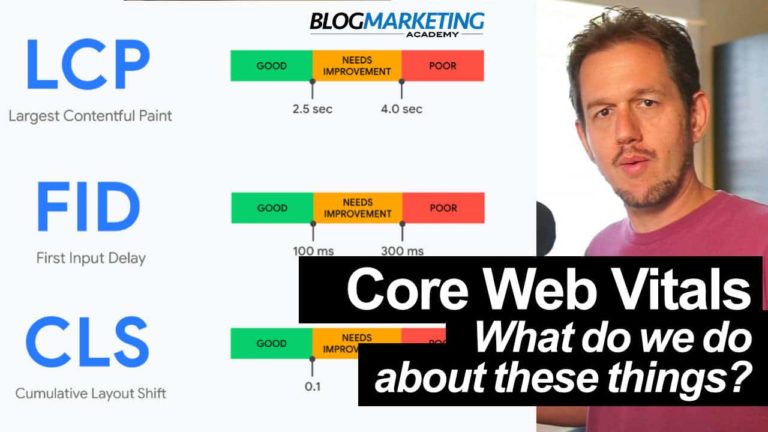
The Google Core Web Vitals are now important SEO ranking factors. So, what are they? How do you get your scores? And what do you need to do about it?

Your blog about page is one of the most important pages of your site. This formula (w/ template) will guide you to creating a conversion-focused page.

An ultimate SEO guide for bloggers and content creators. How relevant is keyword research? What are the factors Google looks at? How exactly do we go about attracting organic traffic from the world’s most popular search engine? This guide covers it all.

How often should you publish a new blog post? What is the best blog post frequency for SEO? The answer might not be what you expect…

A blog content strategy that makes efficient use of time, works for SEO, and helps you build traffic with less effort. I call it The Redwood Strategy.

How to move from blogging to true content marketing using some actual strategic planning. Craft your content marketing calendar with this ultimate guide.

A complete guide to the 9 separate factors that go into crafting the perfect blog post – optimized to have maximum traction after you hit the publish button.

In this post, I’m going to talk to you about how to tweak your blog for conversions. We’ll talk, specifically, about 6 important core pages and how to tweak each of them in order to double your conversions (or more).

58+ blog post headline formulas + the ultimate swipe file. Also, why you should write 25 headlines for every single blog post you publish. I tried it. Here’s how it went…

Today, we’re going to discuss traffic. Because I know that one of the biggest objections to people just getting started is that they don’t have enough traffic to make any sales.
How should you organize your blog content? Should you use categories versus tags? Here’s my current take on how to organize your content in a post-blog, modern world.
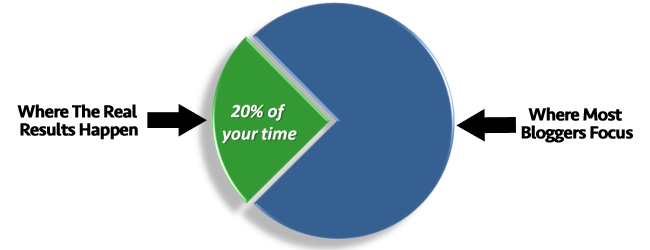
Struggling what to post to your blog? Relax. Because you might just be concentrating on the wrong thing anyway…
After 3 years of on-and-off podcasting, I’ve finally hit a rhythm. And after those 3 years, I learned a lot about how to do it right. Here’s what I learned…

Most bloggers brainstorm content ideas from their own brain. That’s why they run out, and that’s why what they produce often misses. There’s a better approach… start with a 7-word question. Here’s the question, how to ask it, and what to actually do with the answers.
I personally use a spreadsheet to manage my editorial calendar. My spreadsheet is hosted on Google Drive that way it is shareable with others. And the nature of a spreadsheet means that I can have columns for any field I want. And, here are the fields which I personally use.
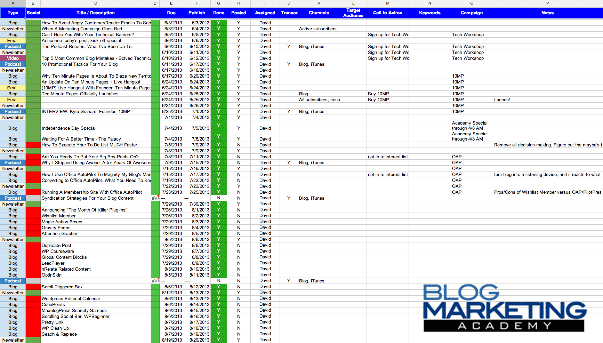
I have been blogging for a long time now and during that time, I’ve had many different styles of content planning. I’ve tried the “no planning” approach, where I’ve sat down knowing I needed to write something but had no idea what the hell to write. Been there, done that. 🙂 I’ve done the “mini planning”…